


For patients in Malawi diagnosed with cancer, surgery is often one part — sometimes the central part — of a broader treatment plan that may also include chemotherapy, radiotherapy, targeted therapy or immunotherapy. India offers comprehensive cancer care across surgical oncology, medical oncology and radiation oncology, including advanced techniques such as robotic and laparoscopic cancer surgery, organ-preserving procedures, and complex reconstructive surgery, delivered by multidisciplinary tumour boards in high-volume cancer centres.
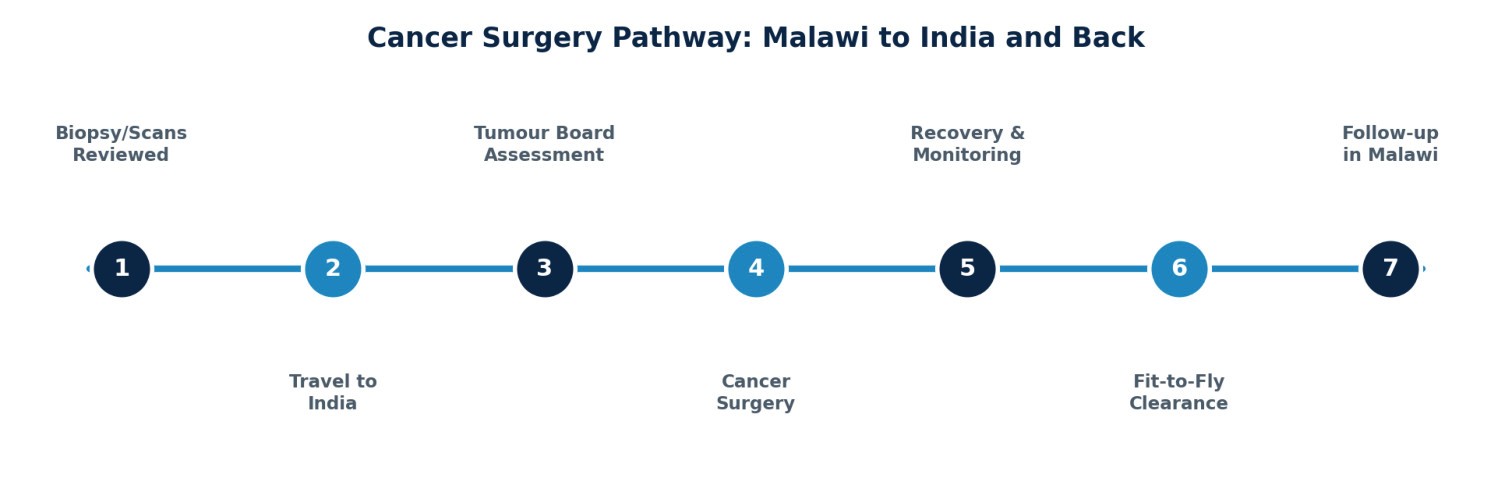
For a patient travelling from Malawi, the important question is not simply “Can this cancer be operated on in India?” The more useful questions are: What exactly is my diagnosis and stage? Is surgery the right first step, or should chemotherapy or radiotherapy come first? Which surgical approach best balances complete tumour removal with preserving function? What are the risks? How long will recovery take? And how should ongoing treatment be coordinated between India and Malawi? This guide explains the clinical aspects of cancer surgery in India from the perspective of Malawi patients.
Table of ContentsCLICK
1. Malawi to India: What Is Cancer Surgery?
Cancer surgery involves the surgical removal of a tumour and, where relevant, surrounding tissue or lymph nodes, either to cure the cancer, control its spread, relieve symptoms, or obtain tissue for diagnosis. The objective and extent of surgery depend entirely on the cancer type, its stage, its location, and whether it has spread. Cancer surgery is therefore not one operation — the appropriate approach depends on a precise diagnosis, staging, and an agreed overall treatment plan, often decided jointly by a multidisciplinary team of surgical, medical and radiation oncologists.
2. Common Cancers for Which Malawi Patients May Consider Surgical Treatment in India
Breast Cancer
Treatment may involve breast-conserving surgery (lumpectomy) or mastectomy, often combined with lymph node evaluation, reconstruction options, and systemic or radiation therapy depending on stage and tumour biology.
Colorectal Cancer
Surgery to remove the affected portion of the colon or rectum, increasingly performed laparoscopically or robotically, is often combined with chemotherapy depending on stage.
Oral and Head & Neck Cancers
Surgery may involve tumour removal, neck lymph node dissection and, in selected cases, reconstructive surgery to restore function and appearance.
Gynaecological Cancers (Cervical, Ovarian, Uterine)
Surgical treatment ranges from fertility-preserving procedures in early-stage disease to more extensive surgery for advanced cancers, often combined with chemotherapy or radiotherapy.
Gastric and Oesophageal Cancer
Surgery to remove part or all of the stomach or oesophagus, frequently combined with chemotherapy before or after surgery.
Liver, Pancreatic and Biliary Cancers
Complex surgery in specialised hepatobiliary centres, sometimes combined with other treatments, with careful patient selection based on tumour extent and liver function.
Prostate Cancer
Treatment options range from active surveillance for very low-risk disease to robotic or open prostatectomy, radiotherapy, or a combination, depending on risk category.
Sarcomas and Rare Tumours
Specialised surgery, often requiring wide excision and sometimes complex reconstruction, ideally performed at centres experienced in these less common tumours.
3. Does Every Condition Need Surgery?
No. Not every cancer is treated with surgery first, or with surgery at all. Depending on the diagnosis and stage, appropriate treatment may include:
- Chemotherapy before surgery to shrink the tumour (neoadjuvant therapy)
- Radiotherapy instead of, or alongside, surgery
- Targeted therapy or immunotherapy based on tumour biology
- Active surveillance for selected very low-risk cancers
- Hormonal therapy for selected hormone-sensitive cancers
A cancer diagnosis does not automatically mean immediate surgery is the right first step. A multidisciplinary tumour board — ideally including surgical, medical and radiation oncologists — should agree on the sequence of treatment based on the cancer type, stage and the patient’s overall health.
4. When May Surgery Be Recommended?
- The tumour is localised and can be completely removed with an acceptable functional outcome
- Surgery is needed to relieve symptoms such as obstruction or bleeding
- Tissue diagnosis (biopsy) requires a surgical procedure
- Surgery follows successful shrinkage of the tumour with chemotherapy or radiotherapy
- Reconstructive surgery is needed after tumour removal
- Recurrent disease requires further surgical treatment
5. Warning Signs Malawi Patients Should Not Ignore
- A new lump or mass that is growing or persistent
- Unexplained weight loss
- Persistent unexplained bleeding
- Persistent difficulty swallowing
- A changing mole or skin lesion
- Persistent unexplained pain, especially with other warning signs
A patient with any of these symptoms should seek prompt medical evaluation in Malawi first, since timely diagnosis significantly affects treatment options, rather than delaying assessment to arrange overseas travel.
6. Malawi to India: Tests Usually Required Before Cancer Surgery
Biopsy and Histopathology
Confirms the diagnosis and provides critical information about tumour type and behaviour.
CT, MRI or PET-CT Scans
Determine the size, location and extent of the tumour, and whether it has spread.
Tumour Marker Blood Tests
May help with diagnosis, monitoring, or assessing response to treatment depending on cancer type.
Molecular and Genetic Testing
Increasingly used to guide targeted therapy decisions for certain cancers.
General Health and Anaesthesia Assessment
Evaluates fitness for surgery, particularly important given the complexity of some cancer operations.
7. Malawi to India: Major Types of Cancer Surgery Available
Open Surgical Resection
Traditional surgery to remove the tumour and, where necessary, surrounding tissue or organs, still the standard for many complex or advanced cancers.
Laparoscopic (Minimally Invasive) Cancer Surgery
Tumour removal through small incisions using camera guidance, suitable for selected cancers and stages, potentially reducing recovery time.
Robotic Cancer Surgery
Robotic-assisted systems provide enhanced precision and dexterity for selected procedures, particularly in prostate, gynaecological, colorectal and some head & neck cancers.
Organ-Preserving Surgery
Techniques designed to remove the tumour while preserving as much healthy organ function as possible, such as breast-conserving surgery or limb-sparing surgery for sarcomas.
HIPEC (Hyperthermic Intraperitoneal Chemotherapy)
A specialised technique combining surgery with heated chemotherapy delivered directly into the abdominal cavity, used for selected cancers that have spread within the abdomen.
Reconstructive Surgery
Follow-up procedures to restore form and function after tumour removal, such as breast reconstruction or flap reconstruction after head & neck surgery.
8. Sentinel Lymph Node Biopsy and Nodal Staging
For many cancers, determining whether the disease has spread to nearby lymph nodes is critical for staging and treatment planning. Sentinel lymph node biopsy allows selective removal and testing of the first node(s) draining the tumour, which can avoid more extensive lymph node removal (and its associated side effects, such as lymphoedema) when the sentinel node is clear.
9. Malawi to India: Multidisciplinary Tumour Boards and Precision Oncology
Advanced Indian cancer centres typically review each case through a multidisciplinary tumour board, bringing together surgical, medical and radiation oncologists, radiologists and pathologists to agree on an individualised treatment sequence. Molecular profiling and precision oncology are increasingly used to match treatment to a tumour’s specific genetic characteristics. A useful question for Malawi patients is not just “Which surgeon will operate?” but “Has my case been reviewed by a full tumour board, and how does surgery fit into my overall treatment plan?”
10. Risks and Possible Complications of Cancer Surgery from Malawi in India
- Infection
- Bleeding
- Delayed wound healing
- Damage to nearby organs, nerves or blood vessels
- Lymphoedema after lymph node removal
- Changes in organ function depending on what is removed
- Anaesthesia-related complications
- Incomplete tumour removal requiring further treatment
- Recurrence of the cancer
- Need for reconstructive or revision surgery
The risk profile of a small, early-stage tumour removal is very different from that of extensive multi-organ cancer surgery. Patients should request procedure- specific and stage-specific risk information rather than relying on generic statistics.
11. Recovery After Cancer Surgery from Malawi in India
Early Phase
- Pain control
- Wound and drain monitoring
- Early mobilisation where appropriate
- Monitoring for early complications
- Nutritional support where relevant
Following Weeks
- Progressive activity increase
- Wound care
- Coordination of any planned chemotherapy or radiotherapy
- Medication adjustment
- Emotional and psychological support
Longer-Term Recovery
Full recovery timelines vary enormously by cancer type and extent of surgery, and further treatment such as chemotherapy or radiotherapy may extend the overall treatment period well beyond the surgical recovery itself.
12. Rehabilitation and Supportive Care
- Physiotherapy to restore strength and mobility
- Lymphoedema management where relevant
- Nutritional counselling
- Speech and swallowing therapy where relevant (head & neck cancers)
- Psychological and survivorship support
- Coordination with ongoing oncology treatment
13. Malawi to India: When Can Patients Return to Work?
This depends heavily on the cancer type, extent of surgery, and whether further treatment such as chemotherapy or radiotherapy is planned. Some patients return to light work within weeks of a limited procedure, while others need several months, particularly if combined treatment is required. This should be discussed individually as part of the overall treatment plan.
14. How Long Should a Malawi Patient Remain in India After Cancer Surgery?
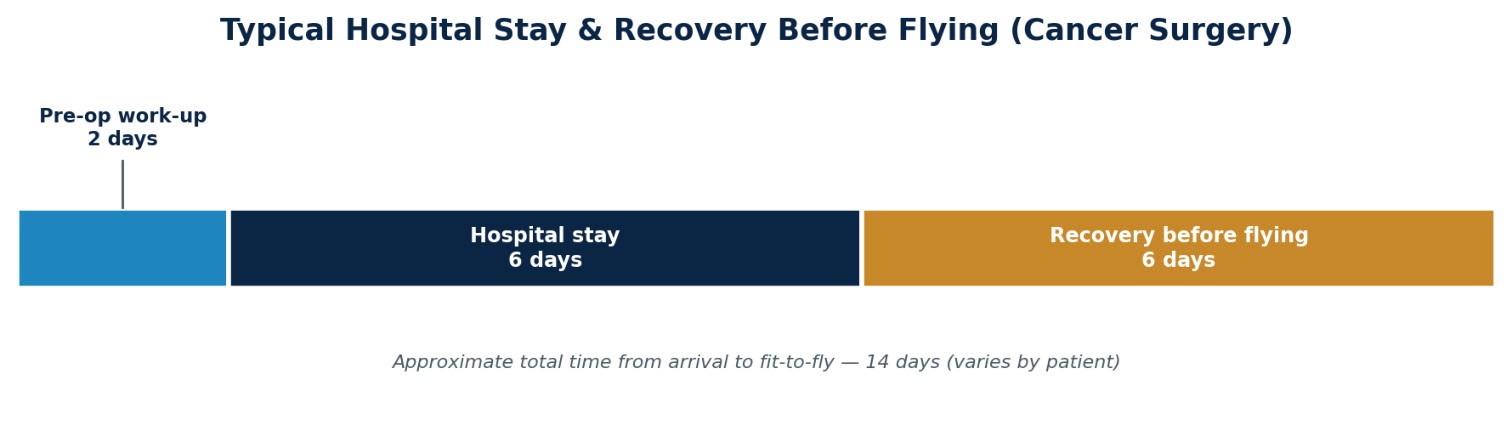
The appropriate period depends on the extent of surgery, wound healing, whether further treatment (such as the first cycle of chemotherapy) is planned in India, and overall recovery. A Malawi patient should discuss the complete treatment sequence — not just the surgery date — before finalising travel plans, since cancer treatment often unfolds in stages rather than a single visit.
15. Flying Back to Malawi After Cancer Surgery
- Fit-to-fly clearance from the treating surgical/medical oncologist
- Wound and drain assessment before flying
- Hydration
- Blood-clot prevention
- Medication timing
- Nutritional considerations for travel
- Airport wheelchair assistance if needed
- Suitable seating
Patients recently discharged after major abdominal, chest or head & neck surgery may need specific clearance regarding cabin pressure changes and mobility before flying.
16. What Medical Information Should You Take Back to Malawi?
- Discharge summary
- Complete operative report
- Final histopathology report
- Staging information
- Relevant imaging (CT/MRI/PET-CT)
- Laboratory and tumour marker results
- Chemotherapy/radiotherapy plan if applicable
- Medication list
- Rehabilitation instructions
- Follow-up and surveillance schedule
- Emergency warning signs
- Treating oncology team’s contact/follow-up pathway
17. Follow-Up After Returning to Malawi
- Wound assessment
- Coordination of ongoing chemotherapy or radiotherapy if planned
- Regular imaging and tumour marker surveillance
- Medication review
- Nutritional and rehabilitation progression
- Psychological and survivorship support
- Long-term cancer surveillance planning
18. How Successful Is Cancer Surgery from Malawi in India?
There is no meaningful single “success rate” for cancer surgery. Outcomes depend on cancer type, stage at diagnosis, tumour biology, completeness of surgical removal, response to any chemotherapy or radiotherapy, and overall health. The expected outcome of surgery for an early-stage, localised cancer cannot reasonably be compared with surgery for advanced or metastatic disease. Patients should be cautious about websites offering one universal survival or success percentage, and should ask for statistics specific to their exact diagnosis and stage.
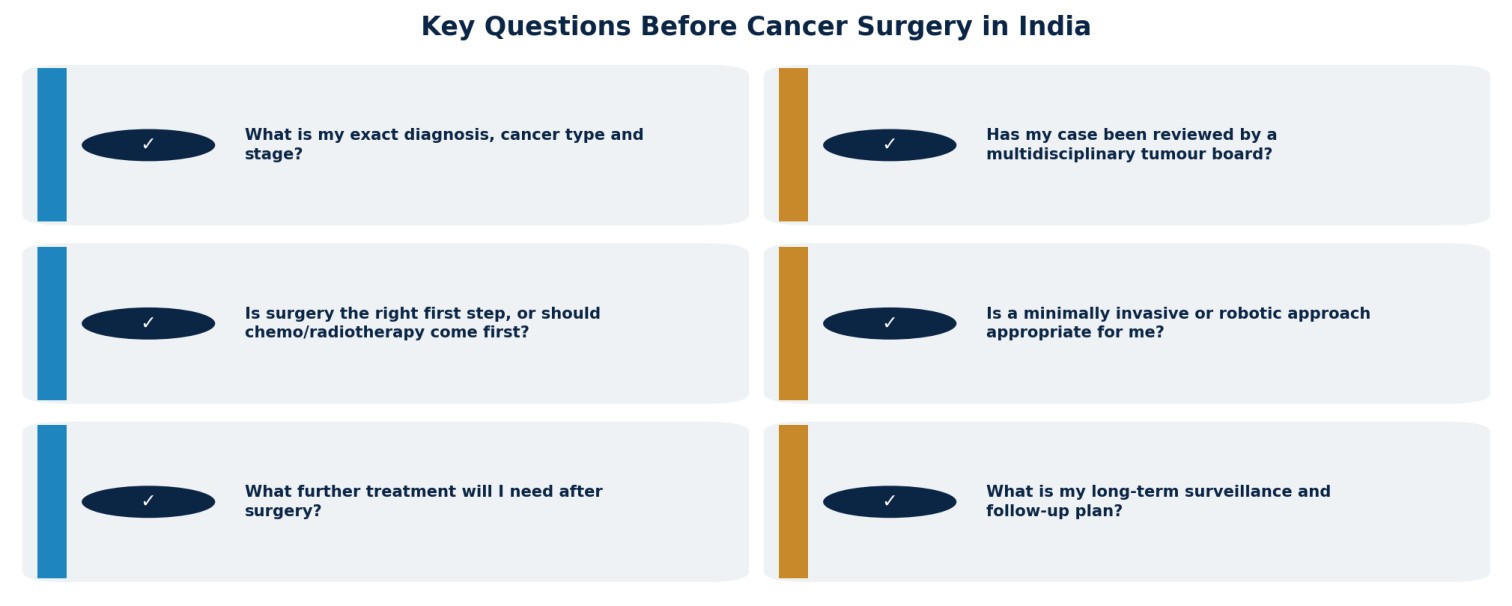
19. Questions Malawi Patients Should Ask Before Agreeing to Surgery
- What is my exact diagnosis, cancer type and stage?
- Has my case been reviewed by a multidisciplinary tumour board?
- Is surgery the right first step, or should chemotherapy/radiotherapy come first?
- What is the surgical plan, and how much tissue or organ will be removed?
- Is a minimally invasive or robotic approach appropriate for my case?
- What is the plan for lymph node evaluation?
- What are the major risks in my specific case?
- How frequently does this team treat this exact cancer type?
- What further treatment will I need after surgery, and where can it be given?
- How long will I be hospitalised, and how long in India afterward?
- When will I be fit to fly back to Malawi?
- What is my long-term surveillance and follow-up plan?
Frequently Asked Questions: Malawi to India Cancer Surgery
Can my biopsy and scans be reviewed before I travel from Malawi?
Often, yes. Digital pathology slides, imaging and reports can frequently be reviewed remotely for an initial opinion, though a definitive treatment plan usually requires in-person evaluation.
From Malawi, does every cancer diagnosis mean immediate surgery in India?
No. Many cancers are treated with chemotherapy or radiotherapy first, or instead of surgery altogether, depending on type and stage.
From Malawi, is robotic cancer surgery in India better than open surgery?
Not universally. It can offer benefits such as smaller incisions and faster recovery for selected cancers and stages, but is not appropriate for every case.
Will I need chemotherapy or radiotherapy in addition to surgery?
This depends entirely on the cancer type and stage. Your multidisciplinary team will advise on the full treatment sequence.
How soon can I fly back to Malawi?
There is no universal timeframe. Your surgical team should clear you based on wound healing, overall recovery, and whether further treatment is needed immediately.
Can chemotherapy or radiotherapy continue in Malawi?
This depends on what is locally available; many patients coordinate an initial treatment phase in India with follow-on care arranged with their Malawi medical team.
From Malawi, what if my cancer has already been treated before?
Treatment for recurrent or persistent disease is often still possible. Send previous pathology, operative records and imaging for assessment.
From Malawi, should I choose a hospital in India based on its technology alone?
No. Technology is one component. Tumour-board-based decision-making, surgeon and team experience with your specific cancer, and coordinated follow-up care remain fundamental.
Key Takeaways: Malawi to India for Cancer Surgery
Travelling from Malawi to India for cancer surgery is a significant decision that is best understood as part of a complete treatment journey, not a single operation. The most important step is obtaining a precise diagnosis and stage, and having the case reviewed by a genuine multidisciplinary tumour board so that surgery is sequenced correctly with any chemotherapy, radiotherapy or targeted therapy that is needed. For a Malawi patient, the plan should also address recovery in India, coordination of any further treatment, and a clear long-term surveillance and follow-up pathway once home.
Citation Block: Cancer Surgery for Malawi Patients in India
Swipe to read more
| Field | Details |
|---|---|
| Article / Topic | Malawi — Cancer Surgery in India: Complete Clinical & Surgical Guide |
| Primary Patient Group | From Malawi — patients diagnosed with cancer for whom surgery is one part of a broader treatment plan, considering treatment in India |
| Typical Hospital Stay | 5–8 days after major cancer surgery |
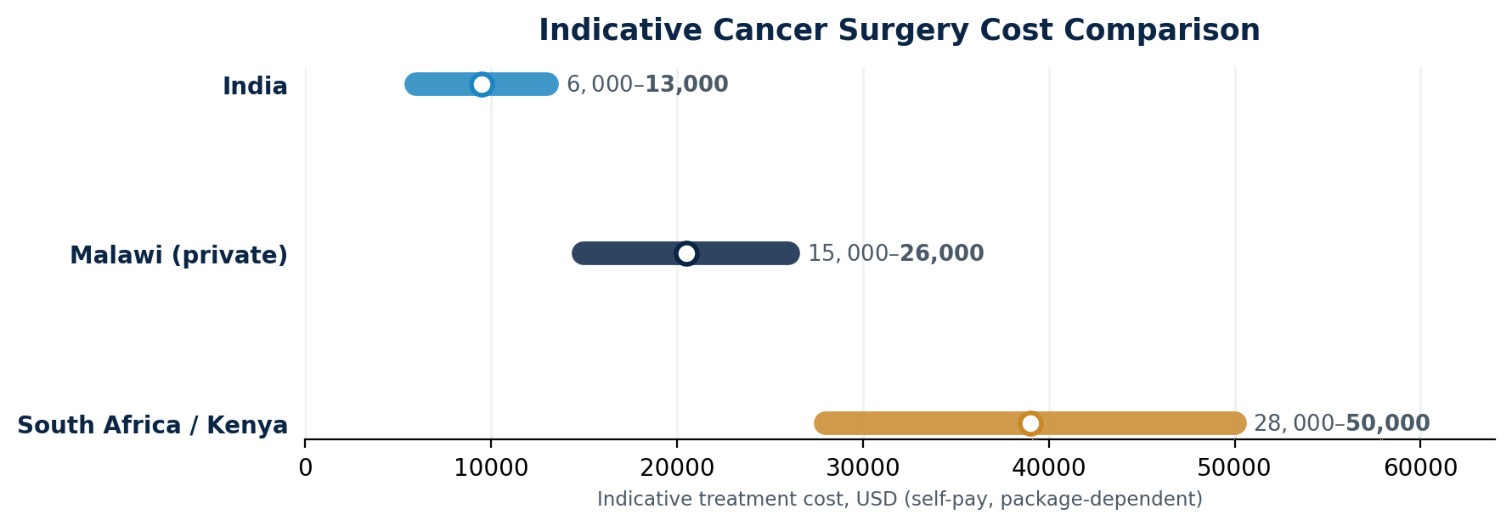
| Typical Cost Saving | 50–70% vs. South Africa/Kenya, package-dependent |
| Cancers Covered | Breast, colorectal, oral and head & neck, gynaecological, gastric and oesophageal, liver, pancreatic and biliary, prostate cancers, sarcomas and rare tumours |
| Tests Before Surgery | Biopsy and histopathology, CT, MRI or PET-CT scans, tumour marker blood tests, molecular and genetic testing, general health and anaesthesia assessment |
| Surgery Types | Open surgical resection, laparoscopic and robotic cancer surgery, organ-preserving surgery, HIPEC, reconstructive surgery |
| Recovery Timeline | Varies by cancer type and extent of surgery; chemotherapy or radiotherapy may extend the overall treatment period well beyond the surgical recovery |
| Documents to Take Back to Malawi | Discharge summary, operative report, final histopathology, staging information, imaging, chemotherapy/radiotherapy plan, follow-up and surveillance schedule |
| Key Decision Factor | From Malawi to India: a precise diagnosis and stage and a genuine multidisciplinary tumour-board review — before choosing a surgeon |
Sources & Further Reading
Malawi Patients — Ready to Take the First Step?
Share your biopsy, scans and medical reports from Malawi with our team today and get a MEDICAL CONSULTATION, an honest view of your treatment options, an indicative cost estimate in US$ and complete support — from your flight out of Lilongwe to your recovery in India and follow-up back home.
Get Your Medical Consultation